What It Really Takes to Write a Book
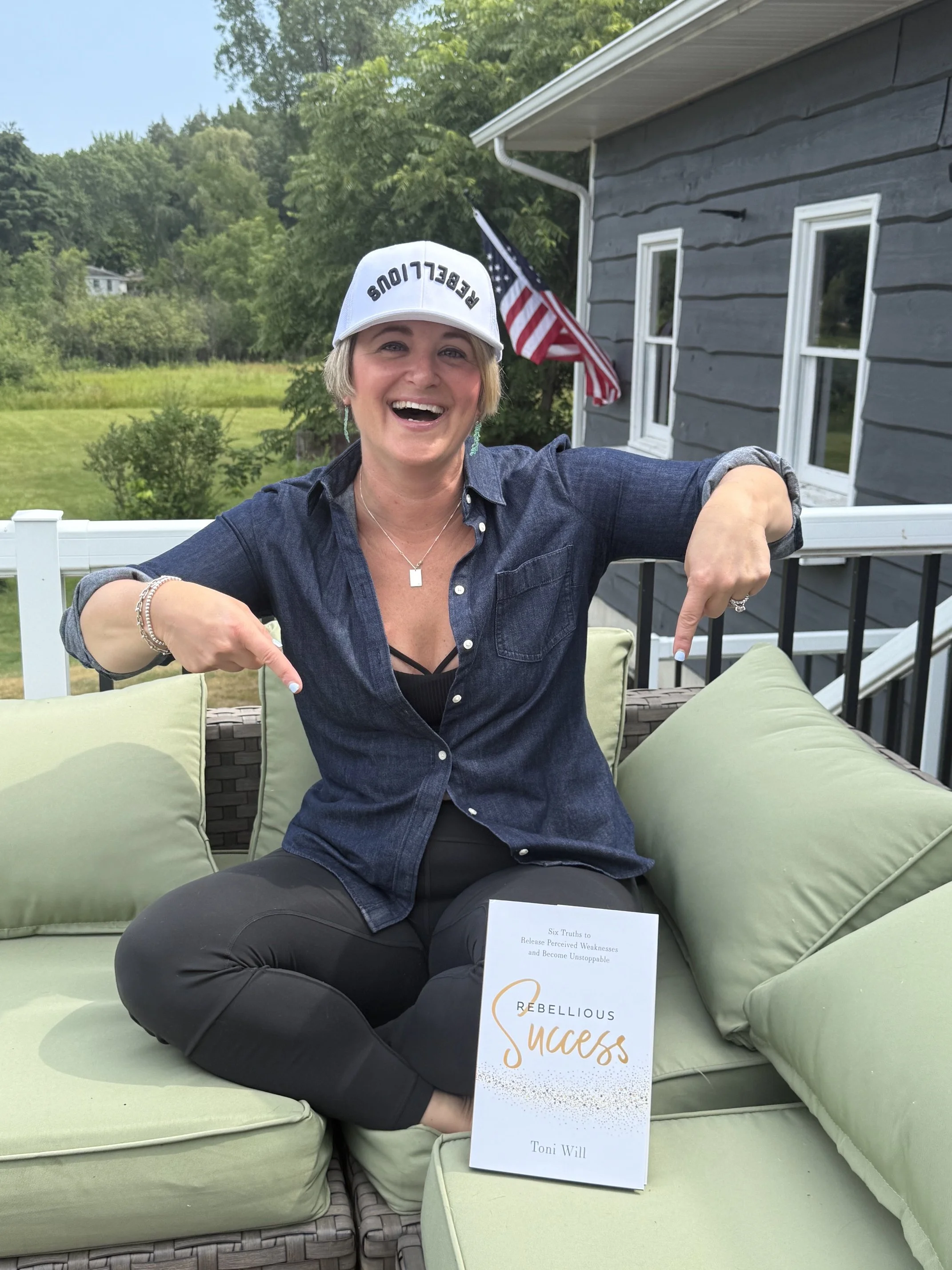
There is something magical about holding a book in your hands.
Whether it's a novel that transports you somewhere you've never been, a memoir that reminds you you're not alone, or a business book that changes the trajectory of your career, books have an incredible ability to shape the way we think. I've loved reading since I was a little girl, and now, just days away from publishing Rebellious Success, I have an even greater appreciation for every author whose name appears on a cover.
Because now I know what it took to get there.
People often ask me, "How long did it take you to write your book?"
It's a fair question, but the more accurate question is, "How long did it take you to publish your book?"
Those are two entirely different things.
Writing the manuscript is only one chapter in the story of becoming an author. Before I ever typed the first sentence of Rebellious Success, I spent months outlining what I wanted the reader to experience. I wasn't interested in simply filling chapters with stories. I wanted every chapter to build upon the previous one, much like a keynote presentation or coaching session. The outline became my roadmap. There were plenty of detours along the way, but knowing where I was headed made it much easier to stay on course.
That was the first lesson.
The second was realizing how quickly I had to let go of the idea that I could figure this out on my own.
One of the leadership principles I write about in Rebellious Success is Go to the Experts. It sounds obvious, but it's amazing how often we ignore our own advice when we're excited about something new. I had never written a book before. More importantly, I had certainly never published one. Why would I assume I knew what I was doing?
So I started asking questions.
I reached out to authors I admired. Some had self-published. Others had traditional publishing deals. A few had gone the hybrid route, which ultimately became the path I chose. Every conversation taught me something different, but together they revealed an important truth. Writing a book and publishing a book require completely different skill sets.
Writing is creative. Publishing is operational. Marketing is entrepreneurial. They overlap, but they are not the same.
One author explained the publishing process to me in a way I'll never forget. She said, "Finishing the manuscript simply means you've earned the right to begin the next phase."
She couldn't have been more right.
There are generally three ways to publish a book. You can self-publish, which gives you complete creative control and typically allows you to move from finished manuscript to publication within a few months if you have the right team in place. You can pursue a traditional publishing deal, which often requires securing an agent, pitching your book, negotiating contracts, and then waiting for the publisher's production schedule. That process can easily stretch beyond two years. Then there's hybrid publishing, which is the path I chose with Greenleaf Book Group. It combines professional publishing support with a collaborative approach, and from contract to publication, my journey took a little over a year.
What surprised me most wasn't choosing a publishing model. It was discovering how much work begins after the manuscript is finished. I naively thought typing "The End" meant I was nearly done.
Instead, it marked the beginning of editing, developmental revisions, copyediting, proofreading, cover design, interior layout, endorsements, audiobook production, retailer setup, metadata, and dozens of decisions I never even knew authors had to make. Every time I thought I had reached the finish line, another one appeared in the distance.
Then came the part almost no one talks about.
Promotion.
I used to think publishing a book meant people would somehow find it. Now I laugh at that thought. Books don't market themselves. Authors do.
Over the past several months I've found myself wearing hats I never anticipated. I've become a content creator, event planner, media coordinator, podcast guest, keynote speaker, website strategist, and social media marketer. There are interviews to schedule, newsletters to write, launch events to organize, bookstores to contact, websites to update, podcasts to appear on, and relationships to nurture. In many ways, publishing a book feels less like completing a project and more like launching a small business.
That realization changed everything for me. I stopped thinking of Rebellious Success as simply a book.
Instead, I began seeing it as part of a larger mission. The book introduces ideas. Speaking engagements allow me to expand on them. Coaching helps people apply them. The podcast continues the conversations. Each piece supports the others, and together they create something much bigger than a single publication date.
Ironically, the entire experience reinforced the very lessons I wrote about. I leaned heavily on experts instead of pretending I knew everything. I had to innovate when the process didn't go as planned. I made mistakes, plenty of them. I trusted talented people to do what they do best instead of trying to control every detail. Most importantly, I learned that meaningful work is almost never linear. It unfolds one courageous decision at a time.