Americans Are Drinking Less. I Think That's Really Good News.
A statistic stopped me in my tracks recently.
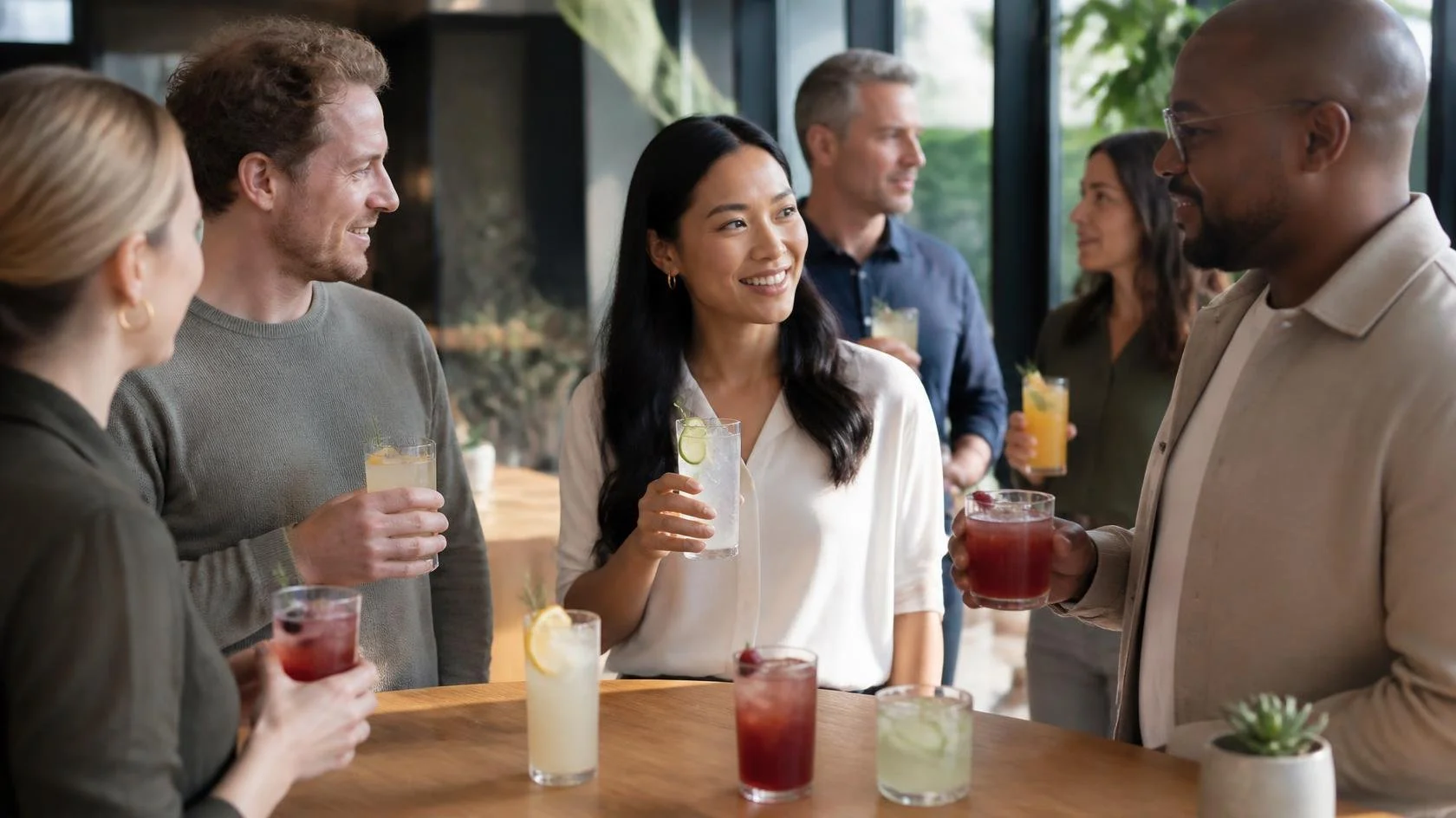
Gallup reported that only 54% of Americans now drink alcohol, tying the lowest percentage the organization has recorded in decades. At the same time, Gen Z is drinking significantly less than previous generations, and the phrase sober curious has quietly worked its way into our everyday vocabulary. Restaurants now feature mocktail menus alongside wine lists. Alcohol-free beer sits next to the IPAs. What once felt unusual has become increasingly...normal.
As I sat with that information, I realized I wasn't encouraged because Americans are drinking less. I was encouraged because Americans are questioning more.
For a long time, alcohol escaped curiosity. It was simply part of life. We celebrated with it. We networked with it. We relaxed with it. We coped with difficult days by promising ourselves we'd earned a glass of wine. No one really stopped to ask whether it was serving them because it was simply what adults did.
Looking back, I don't remember making a conscious decision to become someone who drank. I simply grew into the expectation. Somewhere between college, my banking career, hockey, business dinners, weddings, vacations, and girls' nights, alcohol quietly became part of the script. I don't think anyone handed me that script. I absorbed it by watching everyone else.
That's why I find today's cultural shift so fascinating. People aren't just drinking less. They're giving themselves permission to ask questions they may have never asked before.
That feels significant.
When I decided to stop drinking nearly six years ago, it wasn't because my life had fallen apart. Quite the opposite. By most people's standards, I was successful. I had a career I loved, wonderful relationships, meaningful work, and opportunities I never imagined I'd have.
Yet something didn't feel aligned.
Success looked good from the outside, but it didn't always feel good from the inside. At the time, I thought I was questioning alcohol. Now I realize I was questioning something much bigger.
I was questioning the way I'd been measuring success.
It's funny how one honest question has a way of introducing another. I wondered what life would feel like without alcohol. That led me to wonder why I believed I needed it in certain situations. From there I started examining other assumptions I'd accepted without much thought. Why did being successful have to mean being exhausted? Why did saying yes feel easier than disappointing someone? Why had I spent so many years trying to earn approval from people whose opinions wouldn't matter five years later?
None of those questions had anything to do with alcohol. Alcohol simply happened to be the first thread I pulled. Professional women understand this better than most.
So many of us have become experts at performing competence. We manage careers, families, calendars, expectations, and countless invisible responsibilities. We solve problems all day long, then reward ourselves with a drink because that's what we've been taught successful adults do.
I can't tell you how many coaching conversations have started with the person saying, "I don't think alcohol is really the problem."
Most of the time, she's right. Alcohol isn't the problem. It's the symptom.
The real issue is often exhaustion, perfectionism, people-pleasing, or the quiet realization that somewhere along the way she stopped making decisions based on what she actually wanted. Alcohol simply became one of many habits supporting a life that no longer felt quite right.
That's why I don't believe the sober curious movement is really about drinking. I think it's about permission.
Permission to pause long enough to ask whether our habits still fit the lives we're trying to build.
Permission to admit that what worked at thirty may not work at forty-five.
Permission to discover that confidence doesn't have to come from a cocktail before a networking event or a glass of wine after a stressful meeting.
Permission to evolve.
When I stopped drinking, people often assumed I had given something up. What they didn't see was everything I gained.
I gained quieter mornings and clearer thinking. I became more present in conversations and more comfortable sitting with uncomfortable emotions instead of immediately trying to escape them. I discovered that confidence built from keeping promises to myself lasts much longer than confidence borrowed from a drink.
Most surprisingly, I became a better leader. Not because alcohol had been preventing me from leading. Because questioning one part of my life made me brave enough to question the rest of it.
That willingness to question eventually became the foundation for Rebellious Success. The book isn't about alcohol. It never was. It's about challenging assumptions, making courageous decisions, embracing mistakes, and defining success for yourself instead of accepting the version handed to you by someone else.
When I look at the Gallup numbers today, I don't see a country that's drinking less. I see millions of people becoming just a little more curious.
Curious about what serves them.
Curious about what doesn't.
Curious enough to imagine that life, leadership, relationships, and success might look different than they once believed.
I hope that curiosity continues. Not because I think everyone should stop drinking. They shouldn't. But I do hope more people become willing to pause before living another decade on autopilot. Whether alcohol is part of your story or not almost doesn't matter.
The better question is this:
What assumptions have you accepted simply because everyone else did?
Because sometimes the most rebellious thing we can do isn't changing our behavior.
It's becoming curious enough to ask whether the life we're living is actually our own.