What Are the Best Books on Alcohol-Free Living? My Sober Curious Reading List
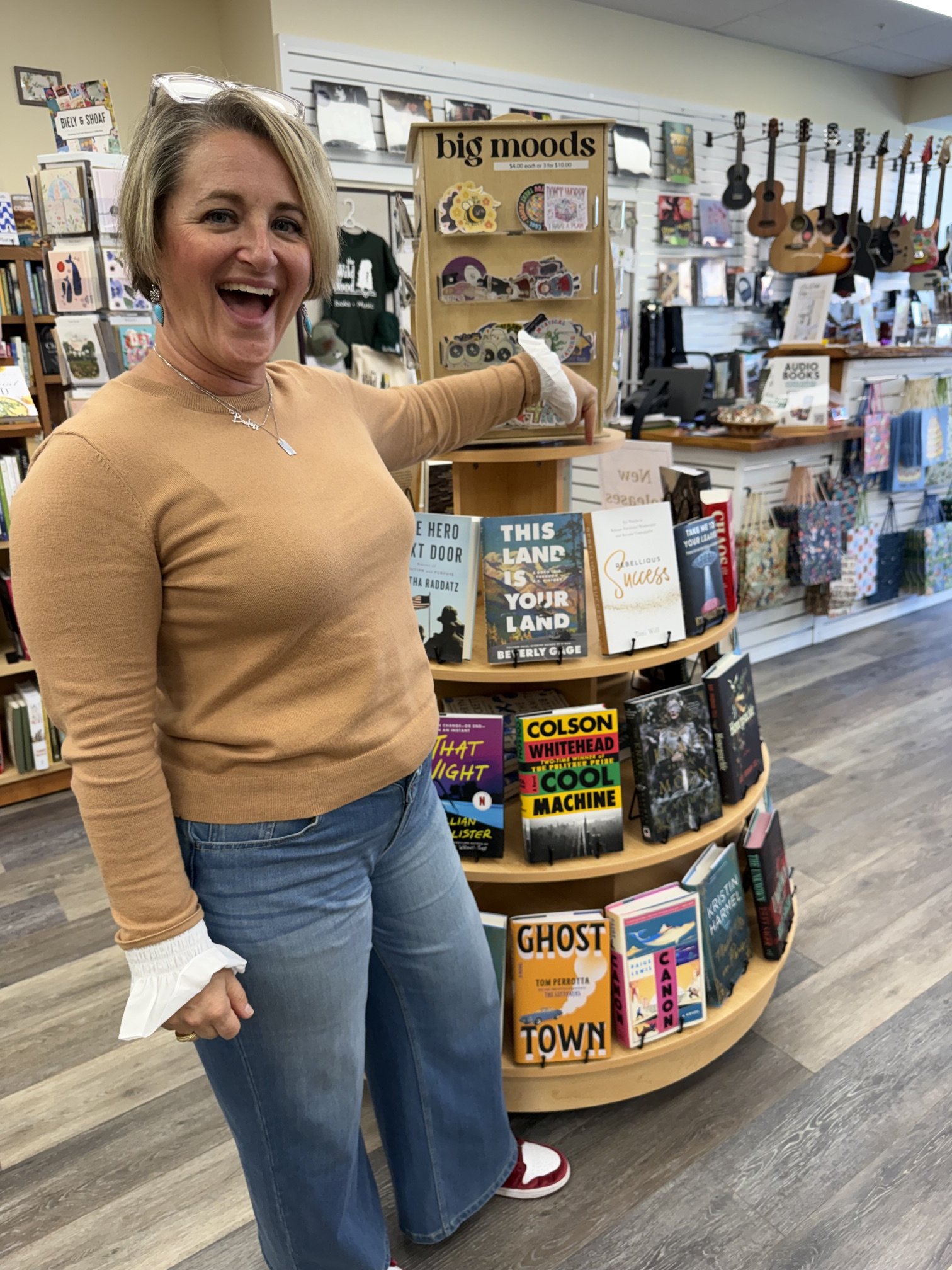
I read my age every year.
It started as a personal challenge and has become one of my favorite traditions. The number keeps getting bigger, which is mildly inconvenient , but I keep doing it because reading is one of the ways I learn, grow, challenge my own thinking and discover ideas I can use in my life, leadership and coaching.
Over the years, I’ve shared my annual reading lists, and they consistently rank among the most downloaded resources on my website. What I haven’t done is pull together a reading list specifically for someone who is sober curious, alcohol-free, questioning their drinking, or simply fascinated by why we do the things we do.
Because here’s the thing: some of the best books for alcohol-free living aren’t actually quit drinking books.
Understanding alcohol matters. But eventually, the more interesting question becomes: Why was I drinking in the first place?
That question is a big reason my own approach to alcohol has evolved into what I call behavior-first change. NOTICE. REPLACE. BUILD. CHOOSE. Instead of spending all our energy trying not to do something, we get curious about the behavior. What need is it meeting? What triggers it? What reward are we getting? What could we try instead?
So if you’re looking for the best books on alcohol-free living, my bookshelf goes beyond sobriety. These are books that have helped me think differently about alcohol, habits, shame, identity, confidence and change itself.
This Naked Mind by Annie Grace
If you’re only going to read one book on this list, start here.
I don't say that casually. This Naked Mind fundamentally changed my life.
When I read it in 2020, I had already had a complicated relationship with alcohol for years. I had quit before. I attended AA. I had tried rules and moderation and plenty of mental gymnastics. What I hadn't found was a way of thinking about alcohol-free living that actually felt like me.
Then I read This Naked Mind.
I devoured it. I highlighted more than I left unmarked and reread entire sections. Annie Grace challenged the idea that giving up alcohol meant giving up something valuable. Instead of deprivation, she presented alcohol-free living as freedom. That distinction was enormous for me.
I have always been a challenger. A rule-questioner. A woman who is perfectly comfortable asking, "Why the hell are we doing it this way?" Suddenly I realized that when it came to drinking, I had been doing exactly what everyone else was doing because everyone else was doing it. That didn't feel very rebellious.
This Naked Mind gave me a new lens. Choosing not to drink wasn't punishment. It could be an act of rebellion against the status quo. That realization became such an important part of my story that I eventually wrote about it in Rebellious Success.
If you're searching for a This Naked Mind book review because you're wondering whether it's worth reading, my answer is simple: it was the book I needed at exactly the time I needed it.
The Alcohol Experiment by Annie Grace
After I finished This Naked Mind, I immediately signed up for Annie Grace's 30-day Alcohol Experiment. I was ALL IN.
What I still love about the experiment mentality is that it takes some of the enormous weight out of the question. You don't have to decide what you're doing for the rest of your life. You can get curious.
What happens if I don't drink tonight? How do I sleep? What happens to my anxiety? When do I crave alcohol? What happened immediately before that craving? What am I actually looking for: relaxation, reward, escape, connection, confidence?
My own alcohol-free journey began as an experiment too. I wanted to know whether my anxiety would improve, whether I'd sleep better, whether I'd have more mental clarity and motivation. For me, the answer to those questions was yes.
That spirit of experimentation remains central to how I coach today. I am far more interested in helping someone understand herself than handing her another rule.
Atomic Habits by James Clear
This isn't a quit drinking book, and that's precisely why it belongs on a sober curious reading list.
Eventually, alcohol becomes a behavior.
Maybe you walk through the door after work and pour wine. Maybe Friday night means cocktails. Maybe vacation means drinking at the airport at 10 a.m. because apparently airports exist outside the normal rules of civilization.
The behavior becomes connected to cues, routines, rewards and identity. That's why habit work became so important to the way I think about alcohol-free living. Removing the drink creates a space. The question is what you're going to build in that space.
This is where behavior-change books can be particularly powerful for women who have already done the introductory sober-curious work. You may already understand that alcohol isn't serving you. Now you're figuring out how to create a life in which you don't need it to do so many jobs.
That requires more than willpower. It requires building new patterns.
The Gifts of Imperfection by Brené Brown
My relationship with alcohol wasn't only about alcohol. There was shame wrapped around it. A LOT of shame.
Shame about things I'd done. Shame about needing help. Shame about not being able to drink "normally." Eventually there was even shame around not drinking. What would people think? Would I still be fun? Would I have to explain myself? Was I now one of those people?
Brené Brown's work helped me understand the distinction between guilt and shame. Guilt says I did something that doesn't align with who I want to be. Shame says there is something fundamentally wrong with me.
That distinction matters enormously when we're trying to change.
I eventually realized I couldn't shame myself into becoming someone I loved. I had to talk about what I'd been hiding. The more openly I talked about my relationship with alcohol, the smaller the shame became. Years later, something that once felt like a giant ball I carried around with me feels more like a grain of sand I misplaced somewhere.
That's progress.
Quit by Annie Duke
Quit isn't about quitting alcohol. It's about knowing when walking away is actually the smart move. I LOVE that idea.
We're taught to worship perseverance. Don't quit. Push through. Finish what you started. Winners never quit. Except sometimes quitting is exactly what moves your life forward.
Alcohol was one of those things for me.
There were years when I kept trying to become better at drinking. More controlled. More moderate. More normal. I made rules. I negotiated with myself. I tried quiet quits and eventually found myself making bargains like, "If I get through Friday, I deserve Saturday." My brain could build a convincing legal case for whatever outcome allowed me to drink.
Eventually, the better question wasn't, "How do I get better at this?" It was, "Why am I working so damn hard to keep something in my life that isn't working?"
That question extends far beyond alcohol. Jobs. Relationships. Goals. Identities. Sometimes walking away isn't failure. Sometimes it's information.
The Confidence Gap by Russ Harris
One of the things that surprises people about alcohol-free living is how much confidence can get tangled up in drinking.
Alcohol can make us feel more confident. Networking is easier. Walking into the party feels easier. Small talk feels easier. Dating feels easier. Dancing definitely feels easier.
Then you remove it. Now you have to walk into the room nervous and do it anyway. That's where real confidence starts getting built.
The Confidence Gap reinforces an idea I use constantly in coaching: you don't have to wait until you feel confident to act. Action can come first. Confidence gets built through evidence.
Every alcohol-free dinner, conference, vacation, holiday or crappy Tuesday you navigate gives you another piece of evidence.
I can do this.
Eventually, that confidence belongs to you instead of something you poured into a glass.
From Strength to Strength by Arthur C. Brooks
This book isn't about alcohol either. It's about the second half of life, which makes it incredibly relevant to the women I work with.
There is a particular question I hear from women in midlife: How did I get here, and why am I not fulfilled?
They've built the career. Raised the kids. Checked the boxes. Been responsible. Accomplished things. From the outside, life may look pretty damn good. Yet something is tugging at them.
Sometimes alcohol is the first thread they pull.
What I've learned is that when you start questioning one automatic behavior, other questions often follow. Do I actually like how I'm spending my time? Does this career still fit me? What do I want now? Who am I when I'm not performing all of these roles for everyone else?
Alcohol-free living can become much bigger than alcohol. It can create enough clarity to hear questions that were already there.
Four Thousand Weeks by Oliver Burkeman
This one belongs here because changing your relationship with alcohol ultimately becomes a conversation about how you want to spend your life.
We get roughly four thousand weeks if we're lucky. That'll get your attention.
When I was drinking, alcohol didn't just consume the hours when I was actually drinking. It could take the workout the next morning. The energy I would have spent with my family. The book I might have read. The idea I might have pursued. The brain space consumed by thinking about drinking, regretting drinking, planning not to drink and then negotiating with myself about drinking.
When I removed alcohol, I got time back. More importantly, I got my presence back.
That's one reason I don't see alcohol-free living as a story about what I've given up. I see it as a story about what I've made room for.
The Best Alcohol-Free Book Is the One That Makes You Curious
If you're searching for the best quit drinking books because you're trying to decide whether you have "enough of a problem" to change, I would encourage you to put that question down for a minute.
You don't need a label to get curious.
You don't have to decide whether you're an alcoholic. You don't have to decide whether you'll drink again. You don't have to announce anything on social media. You don't have to make a forever decision on a random Tuesday afternoon.
Read. Experiment. Notice.
What resonates? What pisses you off? What makes you defensive? What sentence do you highlight and then find yourself thinking about three days later?
Books did not make the decision for me. They gave me new ways to think about the decision.
That distinction matters.
Today, my approach to alcohol-free living is about taking what works, leaving what doesn't and intentionally building something that supports the life you actually want. That's ultimately what I did myself. I took pieces from different approaches, kept what helped me, discarded what didn't and built my own version of an alcohol-free life.
Maybe that's why reading has remained such an important part of my life. A good book doesn't tell me who to become. It hands me a thread.
Then I get to decide whether I want to pull it.