Six Years Alcohol-Free: How a 30-Day Break From Drinking Changed My Life
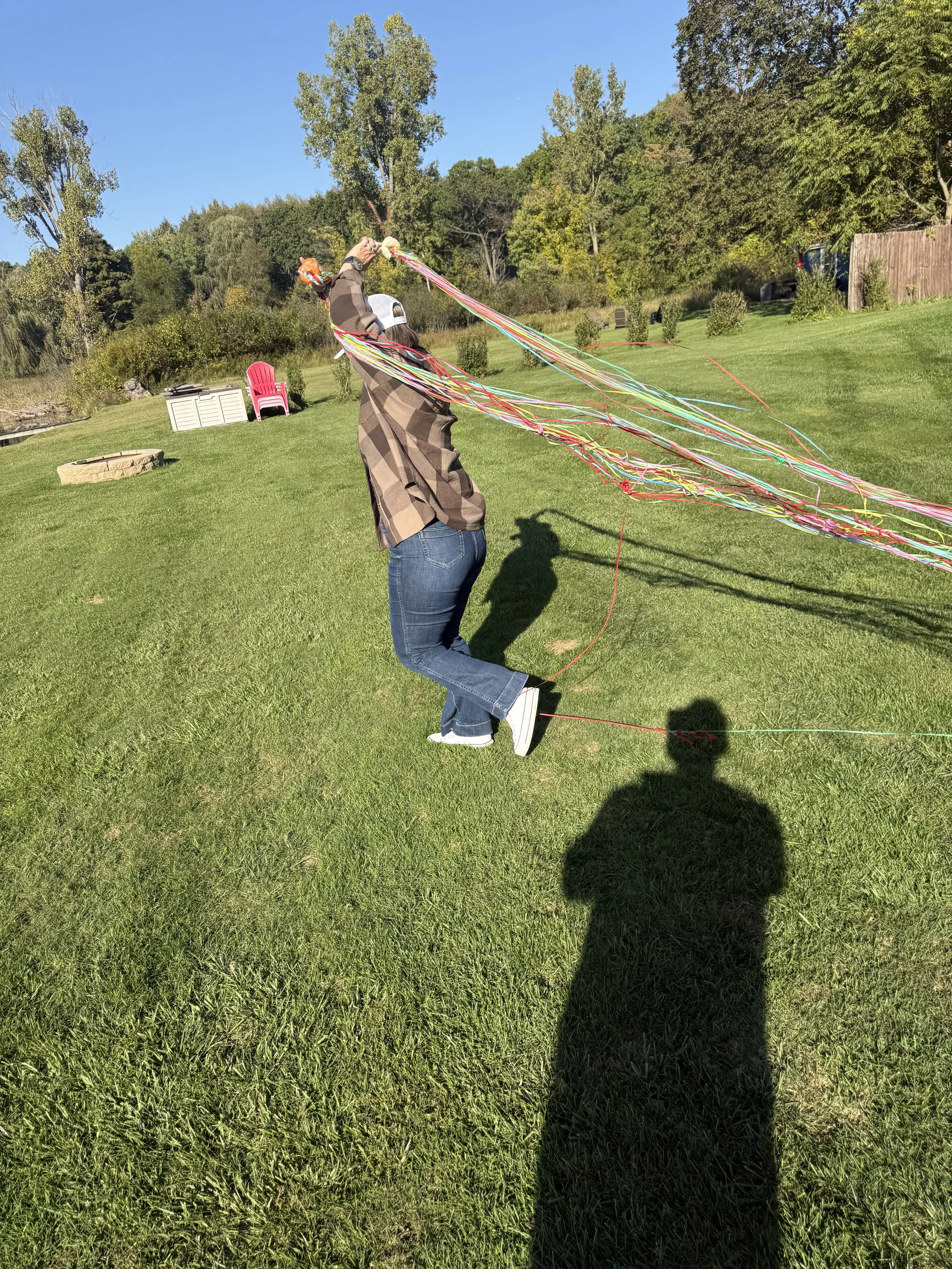
Six years ago today, Monday, October 12, 2020, I woke up and decided to take a 30-day break from alcohol.
Six years. Same date. Same day of the week. VERY different woman.
I did not wake up that Monday morning in 2020 declaring I would never drink again. Quite the opposite. My plan was to take 30 days off, prove to myself that I could control alcohol, and then return to being a more moderate version of Toni Party Time.
Spoiler alert: Toni Party Time never made her comeback.
Think back to October 2020. We were seven months into COVID. Many of us were working from home. Depending on where you lived, gathering with people still wasn't really a thing. Here in Michigan, professional sports looked completely different. The Kalamazoo Wings, the professional hockey team I lead as General Manager and Governor, went "dark," meaning we suspended play for the season.
I was still working full time from home, but my life looked nothing like it normally did. No games. No packed arenas. No sponsorship dinners. No road trips. No normal routine.
Looking back, that strange period created space for me to confront something I had been wrestling with for years: I didn't like my relationship with alcohol.
On October 12, 2020, the conversation in my head sounded something like this: What are you doing, Toni? You've worked so hard to build this life. You have a career you love, a new marriage you adore, kids growing up and pursuing their dreams, and accomplishments you're incredibly proud of. Yet you're proud of yourself when you actually remember going to bed instead of experiencing another brownout or blackout. You're going to lose everything you've worked for if you don't get a grip on this shit.
Not particularly inspirational. Definitely not Instagram-worthy. But true.
The Label I Couldn't Get Comfortable With
This wasn't my first attempt at quitting drinking. Back in 2016 and 2017, I attended Alcoholics Anonymous and stayed sober for approximately 15 months. I did the work, attended meetings and called myself an alcoholic.
There was just one problem. Deep down, I didn't believe the label fit me. I hated it.
AA helps millions of people, and I have enormous respect for anyone who finds recovery and community there. I also respect people who proudly identify as alcoholics. If that word helps someone, fantastic. It didn't help me.
The medical terminology has evolved too. Alcohol use disorder, or AUD, is the recognized medical diagnosis, and it exists on a spectrum from mild to severe. The National Institute on Alcohol Abuse and Alcoholism has also addressed how stigmatizing language can affect people with alcohol use disorder.
Our culture, however, spent decades giving us a very specific image of what an "alcoholic" looked like. You know the stereotype. Someone homeless, drinking from a bottle inside a brown paper bag, living under a bridge.
Meanwhile, plenty of people struggling with alcohol are raising families, running businesses, getting promoted, finishing races and appearing to have their shit completely together.
I was one of them.
When I stopped drinking in 2020, "alcohol-free" was the only label that felt comfortable to me. Six years later, I use sober, alcohol-free and non-drinker pretty interchangeably. The label simply doesn't matter as much anymore.
The freedom does.
I Wanted the Elusive Third Door
Part of my struggle was that I couldn't imagine a life without alcohol. My definition of "having it all" included coffee in the morning and wine at night. I wanted the career in professional sports, my marriage, my kids pursuing their dreams, travel, friends, fun, success and alcohol.
I never stopped to ask myself why alcohol had earned a permanent spot in that picture.
I already had it all. Why the hell did alcohol have to be part of it?
At the time, I couldn't imagine being a non-drinker and somehow being happier or more fulfilled. What would I drink at dinner? What would I do at parties? How would I network in professional sports? What would people think?
Heaven forbid I quit drinking OUT LOUD. Then everyone would think I had a problem.
Of course, I knew I had a problem with my relationship with alcohol. I just didn't want everyone else knowing it.
So I went looking for what I now call the elusive third door. Door one was continuing to drink the way I had been drinking. Door two was quitting. Door three was moderation, that magical place where I would have a couple drinks, never overdo it, remember going to bed, wake up feeling great and never worry about alcohol again.
My 30-day "Toni Time Out" was supposed to help me find door number three. Yes, I called it Toni Time Out because I love alliteration.
Two Weeks In, I Was Crying in My Kitchen
For the first two weeks, I had no real plan. I had my husband, but no community, no education and no group of people going through the same thing. I was white-knuckling it.
I remember standing in our kitchen crying to Josh because I couldn't understand how I could be successful in so many areas of my life and not be able to figure out alcohol.
I had led teams. I had built a career. I had completed two Ironmans and earned a Guinness World Record. Yet this one thing continued to kick my ass.
Josh listened, hugged me and told me I was strong and that he knew I would figure it out. He didn't try to fix it. He just loved me through it.
Eventually, I did what any highly sophisticated researcher does when she has no idea what to do next.
I Googled it.
I searched for ways to quit drinking besides AA, and that's when I discovered Annie Grace and This Naked Mind. I bought the book along with The Alcohol Experiment. I'm an avid reader, so I gobbled them up.
For the first time, I was learning about alcohol in a way that made sense to me. Instead of spending all my energy resisting alcohol, I started questioning what I believed about it. Did it actually help me relax? Did I really need it to socialize? Was it making my life more fun, or had I simply repeated that story for so long that I believed it?
Then I discovered This Naked Mind was offering a live 30-day Alcohol Experiment beginning November 1, complete with a private Facebook community. It cost $47. I signed up.
Suddenly, I had education, structure and PEOPLE. I was talking to Josh about what I was learning. I was meeting others who were asking the same questions. Instead of feeling like I was depriving myself of something, I became curious about what alcohol was actually doing in my life.
That shift changed everything.
Thirty Days Quietly Became Six Years
Because I had already spent about two weeks white-knuckling my way through sobriety before the Alcohol Experiment started, my original 30-day goal quietly became roughly 45 days.
When the experiment ended, I wasn't ready to drink again.
I wasn't ready to declare "forever," either.
I needed another finish line, so I found Sober Sis and joined a 21-day program. Suddenly, I was approaching 11 weeks alcohol-free and the end of 2020.
Years later, I learned there was a name for what I was doing: lengthening. Instead of trying to comprehend never drinking again, I kept extending the commitment. Thirty days became 45. Then another 21. Each stretch gave me more information about what my life felt like without alcohol.
That was far less intimidating than forever.
It also gave me permission to change my mind. I started this entire experiment trying to prove I could moderate. A couple of months later, I was asking a completely different question.
Do I even WANT to drink again?
That was new.
Around the same time, I learned that This Naked Mind was offering a six-month coaching certification program. I had coached people throughout my entire leadership career, helping employees set goals, grow and accomplish things they weren't sure they could do. Why couldn't I use those same skills to help people change their relationships with alcohol?
COVID had created a small window in my life where I actually had the capacity to try it. I knew professional hockey would eventually return and life would get crazy again.
So I went for it.
There was another benefit I didn't talk much about at the time. Becoming an alcohol-free coach was also one hell of an insurance policy for me. If I built an entire business around helping people change their relationship with alcohol, ole Toni Party Time was going to have a pretty difficult time coming out of retirement.
The problem was that building the business meant I needed to tell people why I was doing it.
Publicly. That terrified me.
What if people thought I was an alcoholic? What if it somehow affected my career? What if people treated me differently? What if I eventually wanted to drink again and had to explain THAT?
At the end of 2020, I pushed past all of it and posted my story on social media.
I quit drinking out loud.
I Thought Alcohol Was Part of Having It All
This is the part that fascinates me most six years later.
I genuinely believed alcohol was part of the good life I had worked so hard to build. I didn't realize that it was actually preventing me from fully experiencing what I already had.
My career didn't collapse when I stopped drinking. My marriage didn't become boring. My friends didn't disappear. I didn't stop going to dinners, conferences, hockey games, parties or celebrations. I still travel. I still laugh. I still dance. I still sing karaoke (poorly). I still make questionable decisions occasionally.
The questionable decisions just don't involve alcohol anymore. What disappeared was the mental load.
I don't wake up wondering what I said the night before. I don't check my phone to see who I texted. I don't feel proud because I actually remember going to bed. I don't spend the afternoon negotiating with myself about how many drinks I'll allow myself that evening, only to change the rules once I start drinking.
That freedom is difficult to explain to someone who hasn't experienced the constant negotiation.
Alcohol also occupies far less space in my identity today. Six years ago, not drinking felt enormous. I was learning how to socialize, travel, celebrate, relax and live without something that had been woven into all of those experiences.
Today? I simply don't drink.
Call me sober. Call me alcohol-free. Call me a non-drinker.
Whatever.
I'm much more interested in the woman I've become without alcohol than the label used to describe why I don't consume it.
You Don't Have to Decide Forever
If you're reading this because you've been questioning your own relationship with alcohol, I want you to know that I did not begin this journey believing I would be celebrating six years alcohol-free.
I started with 30 days.
Actually, I started with a plan to take 30 days off so I could go back to drinking.
You don't need to know today what you'll want six months from now. You don't need a dramatic rock bottom before you're allowed to get curious. You don't need to lose your job, damage your marriage or have something catastrophic happen before deciding that your relationship with alcohol isn't working for you.
My life looked pretty damn good from the outside. It WAS pretty damn good. That's what took me so long to understand. I didn't need my life to fall apart before I was allowed to remove something that wasn't serving me.
If You're Curious About Taking a Break From Alcohol
Six years gives me plenty of hindsight, but I don't think anyone needs to replicate my exact path. If you're questioning alcohol, these are the pieces of my experience I'd take with you:
Don't start with forever if forever scares the hell out of you. Try 30 days. Get curious. Collect information about how you sleep, feel, think and show up without alcohol.
Use whatever label works for you, including no label at all. Sober, alcohol-free, non-drinker, sober curious. Your terminology doesn't determine whether the change is meaningful.
Don't white-knuckle it alone. Education and community changed my experience completely. If you drink heavily or are concerned about withdrawal, talk with a medical professional before stopping because alcohol withdrawal can be dangerous.
Lengthen instead of declaring forever. Thirty days can become another week, another month or another challenge. You can decide what's next when you get there.
Question what you believe alcohol gives you. This was the game changer for me. Instead of only asking, "How do I stop drinking?" I started asking, "Why do I believe I need this in the first place?"
Let yourself change your mind. I began this journey wanting to moderate. Eventually, I realized I didn't want alcohol back. That wasn't failure. It was new information.
If you're looking for resources, This Naked Mind and The Alcohol Experiment by Annie Grace were instrumental for me. Sober Sis gave me another community and another goal when I needed one. There are far more alcohol-free resources, communities, podcasts, books and programs available today than there were when I Googled "ways to quit drinking besides AA" in my kitchen six years ago.
Six Years Later
I've thought a lot this week about the woman who woke up on Monday, October 12, 2020.
She had no idea she was starting a six-year journey. She certainly didn't know she'd become an alcohol-free coach, build a business, publicly talk about something she'd spent years trying to hide, or eventually write a book about questioning the rules we inherit about success.
She just knew something wasn't working anymore.
For years, I thought "having it all" meant figuring out how to keep alcohol in my life without letting it cause problems.
Six years later, I see it completely differently. I already had it all. I just couldn't see that alcohol didn't need to be part of it.
Happy six years to Toni Sober Time. Toni Party Time, thanks for the memories.
Well, the ones I can remember.